
For many victims of commercial motor vehicle (CMV) accidents or their loved ones, filing a lawsuit against the driver and their company can be their best chance at seeking justice and recovering damages. Regardless of the type of CMV that was involved in the wreck, whether it’s a semi tractor-trailer, flatbed truck, bus, or other heavy truck, these accidents often result in medical costs, loss of wages, potential funeral and burial costs, emotional damages, and more. Those that are affected by these catastrophic wrecks may never fully return to their normal daily lives, and it is the job of juries to determine fair compensation for these lawsuits.
However, there are groups within the trucking and insurance industries that push changes to legislation that could further hurt the victims of truck wrecks. Trucking and insurance lobbying groups that have a lot of power and choose to look out for their own interests, not the interests of the public, work with the U.S. Chamber of Commerce to alter insurance minimums and caps on damages to benefit the bad drivers and companies.
While keeping insurance minimums low does not encourage unsafe drivers and companies to take preventative measures against safety risks, it is tort reform that directly hurts victims when they need the most help. These reforms essentially change how personal injury lawsuits can be pursued.
What is Tort Reform?
A tort is a legal term for a wrongful act that causes harm to an individual. Tort reform is a concept that describes a series of laws that are passed to alter the rules of the civil legal system and personal injury lawsuits. These legislative changes shape the balance between the rights of injured parties and the responsibilities of corporations and professionals.
These reforms are often pushed by insurance companies that care more about their profits than the people they hurt, hiring lobbyists, lawyers, and others to sway legislators to change the civil legal system to work in their favor. Although these companies display exponential growth over the years, they claim jury verdicts hurt their profits. If you are ever injured because of someone else’s negligence, tort reform can greatly impact your right to pursue a lawsuit.
There are multiple types of legislation that are pushed to change how torts are pursued:
- Caps on damages: A legal limit on the amount of money an injured person can recover, particularly for non-economic damages like pain and suffering.
- Modifications to liability rules: Alterations to long-standing legal rules regarding who is held liable for an injury.
- Restrictions on punitive damages: Meant to make it more difficult to get punitive damages, which punishes defendants for extremely reckless behavior.
- Changes to the collateral source rule: Allows a jury or court to take payments the plaintiff has received from other sources into account when determining verdicts.
- Pre-suit requirements: Intended to create procedural hurdles that must be cleared before an individual can even file suit.
Arguments For and Against Tort Reform
Supporters of tort reform, typically insurance companies and large corporations, argue that the litigation process needs more restrictions. Some state that lawsuits are too expensive, claiming that excessive jury awards lead to increased insurance prices for everyone, including trucking companies and other businesses that buy liability insurance. They also believe that massive, unpredictable verdicts make it harder for them to assess risk and price products and services as a result. Lastly, those in favor of tort reform think the current litigation process encourages “frivolous” lawsuits, leading to the filing of lawsuits with little merit because of the potential for a large settlement.
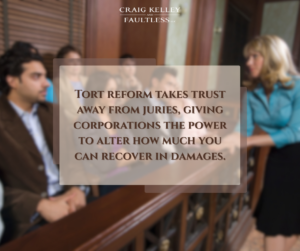
However, those that are against these reforms, such as consumer advocates and trial lawyers, believe these alterations rig the system against victims. Caps on damages punish the most severely injured, preventing them from receiving the compensation they need. It also takes power away from juries, disrespecting their role in the judicial system by claiming they are not in the best position to determine a fair settlement. Additionally, the number of personal injury lawsuits that have been filed has actually declined over the years, and massive verdicts are extremely rare. Tort reforms also reduce accountability because if a corporation knows its financial risk is legally capped, it will have less incentive to prioritize and invest in safety, since the capped penalty may be cheaper than fixing a safety risk.
While tort reform has both supporters and opposers, it is crucial to consider how these changes can impact constitutional rights. The constitution guarantees a right to a jury trial, and implementing damage caps violates this right by allowing the legislature to substitute its judgment for the jury’s. Furthermore, setting damage amounts allows the legislative branch to go against the separation of powers and interfere with the duties of the judicial branch. These reforms could also violate equal protection by unfairly discriminating against catastrophically injured victims. Damages caps deny full recovery to those that are severely injured, but those with fewer critical injuries would have access to a full recovery.
Stand Up Against Tort Reform
Voters and constituents have the power to contact their state senators and representatives and voice their opinions on upcoming legislation. When you hear that tort reform is on the docket for the next legislative session, reach out to your elected officials and let them know your thoughts on these laws.
If you have experienced a commercial motor vehicle crash or other catastrophic injury, be ready to share your experience and how reforms could drastically affect the lives of those who are going through the same hardships you have. Sometimes, the most effective way to prevent these pieces of legislation from becoming law is speaking up and showing those in Congress how these laws affect ordinary citizens.
Get to Know the Guest: A Truck Accident Attorney Who Fights for the Public
Scott A. Faultless is a founding member and partner of Craig, Kelley & Faultless and is board-certified in Truck Accident Law by the National Board of Trial Advocacy. He has dedicated over 30 years to making a positive difference in the lives of people as a personal injury attorney and a civic leader, focusing much of his efforts on helping victims of commercial motor vehicle accidents.
In addition to his daily efforts to help clients, Scott has been recognized by the National Trial Lawyers Association as a Top 10 Trucking Trial Lawyer and a Top 100 Trial Lawyer. Scott serves as the Secretary for the Indiana Trial Lawyers Association and is a member of the Executive Committee and Board of Directors. Additionally, he is a Co-Chair for the Academy of Truck Accident Attorneys (ATAA) Safety Committee and sits on the ATAA Board of Regents. Scott shares his expertise through writing about truck accident legal issues and presenting materials to the ATAA and the Association of Plaintiff Interstate Trucking Lawyers of America.
Outside of his legal practice, Scott previously served on the Fishers Town Council as its president from 2001 to 2013 and received the Sagamore of the Wabash Award. This honor is one of the highest in Indiana and is bestowed by the governor to citizens that have demonstrated distinguished civic service and leadership.
After the Crash Podcast: A Legal Resource for Truck Wreck Victims
After the Crash is currently ranked No. 4 in personal injury podcasts. It is the highest-ranked podcast focusing on personal injury resulting from commercial vehicle and truck wrecks.
The podcast was launched over five years ago, in the fall of 2020, by attorney David W. Craig. It educates and empowers listeners in a digestible format. It is primarily aimed at the victims and the families of victims of semi or other large truck accidents.
It is David’s goal to equip listeners with the knowledge necessary to navigate this tough time in their lives. Anyone — truck wreck survivors, legal professionals, healthcare workers, and anyone in between — can tune into After the Crash for free.
A new episode is released monthly, featuring a guest with an important perspective. In each episode, David interviews individuals involved in commercial motor vehicle cases, or experts whose skills are crucial to understanding trucking cases.
Episodes are posted on YouTube, Spotify, Amazon and Apple Podcasts, and the Craig, Kelley & Faultless website.
Injured After a Truck Wreck? Craig, Kelley & Faultless Can Help
Attorneys at Craig, Kelley & Faultless are prepared and have the experience to help victims and their loved ones involved in commercial vehicle wrecks through every aspect of their case. Both attorneys David W. Craig and Scott A. Faultless are board-certified in truck accident law by the NBTA, accredited by the American Bar Association. The firm also has a rapid response team that works with investigators, reconstructionists and mechanics who immediately collect evidence as soon as the firm is hired. Additionally, two of the firm’s litigation paralegals are board-certified in truck accident law by the Academy of Truck Accident Attorneys. As David has said, “We don’t just handle truck accident cases. We specialize in these cases.”
Their team-centered approach puts client needs at the forefront, and several attorneys will work on your case to achieve the best possible outcome.
Reach out for a free case consultation today at (888) 253-5198 or online.
David W. Craig is board-certified by the National Board of Trial Advocacy, accredited by the American Bar Association in Truck Accident Law. He sits on the Board of Regents of the Academy of Truck Accident Attorneys (which requires the board certification in truck accident law). He is the managing partner and one of the founding partners of Craig, Kelley & Faultless LLC. He is recognized as a Top 10 Trucking Trial Lawyer and Top 100 Trial Lawyer in Indiana by the National Trial Lawyers, as well as a Top 50 Indiana lawyer by Super Lawyers. David is the author of Semitruck Wreck, A Guide for Victims and Their Families and It’s Never Been Easier to Hire the Wrong Attorney, both written to help people navigate what comes next after a tragic wreck. He also hosts the podcast After the Crash, where you can gain valuable information about the dangers involving semis and large trucks that do not follow safety protocol regarding speed, weather conditions, maintenance upkeep, etc.

 Email
Email Facebook
 Twitter
 Linkedin
 Instagram