

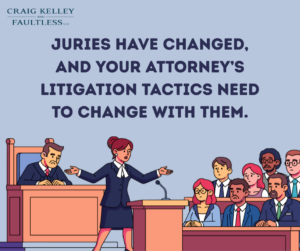
For truck wreck cases, sometimes going to trial is the only way your attorney can get you the justice you deserve. But trials for these cases can be complicated, and your lawyer should have the litigation experience necessary to achieve the best outcome.
When the defendant in a trucking case refuses to be reasonable, the next best choice may be taking the case to trial. These trials are decided by juries. However, juries have changed in recent years—particularly the opinions and beliefs of jurors. This shift in attitudes can greatly affect the results of your trial if your attorney has not adapted their litigation tactics in response.
So, how have juries changed and what should attorneys do to modify how they approach the jury?
Changing Attitudes of Jurors
Since the COVID-19 pandemic, jury pools have dramatically changed, according to jury research conducted by the trial team at Orrick, a global law firm focusing on technology and innovation, energy and infrastructure, finance, and life sciences and health tech. Currently, members of Generation Z are serving on jury panels in higher numbers than ever before, while service from all other generations is declining. The jurors we see now are a reflection of our more polarized society, holding more firm beliefs on social causes, politics, and perceived injustices. These beliefs make them more likely to deliver their own sense of justice.
Orrick’s study found that jurors now lean more toward higher verdicts, or verdicts greater than $10 million, that include large sums for pain and suffering, as well as immense economic damages for the perceived wrongdoer with the intent to “send a message”. This research included a survey of jury-eligible people in jurisdictions where large verdicts have become more common in the past decade, resulting in 1,011 participants that reflect the make-up of those showing up for jury service in these areas.
Their results found that large portions of today’s jurors hold negative opinions of large corporations, positive opinions of lawyers who represent injured people in lawsuits, and agree that a company’s response to a mistake is as important as the mistake itself. Furthermore, data trends show a shift toward juror activism, with a declining trust in institutions.
Today, 48% of jurors surveyed trust courts, as opposed to 67% before the pandemic. 17% of jurors also reported no confidence at all in the courts, which is up from 8% prior to the pandemic. Anti-corporate sentiment has also doubled from 27% to 45%. Lastly, jurors are now more likely to think it is important for juries to force companies to improve their behavior and believe punitive damages are an effective way to “punish” corporations.
Jurors are also more likely to make snap judgments, even when they have no specifics about the case. Before the COVID-19 pandemic, most potential jurors would remain neutral when asked hypotheticals about who they would favor in a lawsuit; now, many jurors do pick a side, and that side is usually the plaintiff. Ultimately, today’s jurors are more likely to let their biases influence their decisions.
This change is especially important when the case involves a semi-truck accident. While jurors may be more likely to distrust a large trucking corporation, aim for large punitive damages, or side with the plaintiff, they are also less trustful of the court system and lean more toward allowing their biases to affect their decision-making. These factors can make juries unpredictable, which means your attorney must be able to format their arguments to meet the expectations of these jurors.
What Should My Attorney’s Approach Be in Court?
Potential jurors today are likely to believe there are “universal” concepts of right and wrong with clear distinctions between the two. They also believe the creation of an emotional connection to the subject of the trial and those involved is critical to making an informed decision on a verdict. Orrick’s study believes trial lawyers must now be able to build emotional connections, so jurors feel their verdict aligns with what they believe is the “right” outcome.
But how can your attorney achieve this? Some of the best methods include testing trial arguments on “mock jurors”. Although Nationally Recognized Truck Accident Attorney David W. Craig of Craig, Kelley & Faultless doesn’t agree with all of the Orrick study, there are parts he agrees with. Plus, he has indicated that the public perceptions and feelings are always changing and the trial attorney who does not regularly run focus groups or mock trials has no way to properly prepare for these changes.
On a recent episode of the After the Crash podcast, David and fellow Board-Certified Truck Wreck Attorney Christy Crowe Childers discussed how their approaches have changed to adapt to juries.
Christy described her creation of a data platform where she can ask hundreds of humans at once their thoughts on trial tactics. She also ran a recent study that found that if she humanized her clients in the beginning of the opening statement at trial, it doubled the number of people who wanted to give the “big numbers” in the case. This method is a deviation from how she was taught to format her arguments, but she discovered that humanizing the client can change the numbers in a statistically significant way.
Additionally, both David and Christy utilize focus groups in their case preparations. By testing arguments and methods of litigation on focus groups, they have discovered that juries are more likely to care about topics based on the areas they live or learn that jurors may focus more on speeding and similar violations than they thought. Focus groups have also been beneficial in helping David show the other side that what they may have thought was not a problem is actually a huge issue in the eyes of a potential jury.
The choice to change litigation tactics based on the beliefs and opinions that are held by today’s jurors has allowed David and Christy to not only improve how they fight these trucking cases but also provide victims with the verdicts they deserve. And if your attorney is not willing to adapt to how juries have changed, you may not get the justice you are rightfully owed.
Injured After a Truck Wreck? Craig, Kelley & Faultless Can Help
Attorneys at Craig, Kelley & Faultless are prepared and have the experience to help victims and their loved ones involved in commercial vehicle wrecks through every aspect of their case. Both attorneys David W. Craig and Scott A. Faultless are board-certified in truck accident law by the NBTA, accredited by the American Bar Association. The firm also has a rapid response team that works with investigators, reconstructionists and mechanics who immediately collect evidence as soon as the firm is hired. Additionally, two of the firm’s litigation paralegals are board-certified in truck accident law by the Academy of Truck Accident Attorneys. As David has said, “We don’t just handle truck accident cases. We specialize in these cases.”
Their team-centered approach puts client needs at the forefront, and several attorneys will work on your case to achieve the best possible outcome.
Reach out for a free case consultation today at (888) 253-5198 or online.
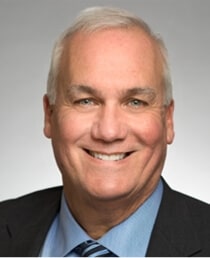
David W. Craig is board-certified by the National Board of Trial Advocacy, accredited by the American Bar Association in Truck Accident Law. He sits on the Board of Regents of the Academy of Truck Accident Attorneys (which requires the board certification in truck accident law). He is the managing partner and one of the founding partners of Craig, Kelley & Faultless LLC. He is recognized as a Top 10 Trucking Trial Lawyer and Top 100 Trial Lawyer in Indiana by the National Trial Lawyers, as well as a Top 50 Indiana lawyer by Super Lawyers. David is the author of Semitruck Wreck, A Guide for Victims and Their Families and It’s Never Been Easier to Hire the Wrong Attorney, both written to help people navigate what comes next after a tragic wreck. He also hosts the podcast After the Crash, where you can gain valuable information about the dangers involving semis and large trucks that do not follow safety protocol regarding speed, weather conditions, maintenance upkeep, etc.
 Email
Email Facebook
 Twitter
 Linkedin
 Instagram