
With the introduction of the Trump Administration in 2025 following President Trump’s inauguration, there were many changes to federal trucking regulations. Ranging from changes to language requirements and cracking down on the issuing of non-domiciled commercial driver’s licenses, to adjustments of safety measures and new leadership, those involved in the trucking industry were faced with several shifts in the rules and mandates they must follow. Some of the changes will make the roads safer, but others will make traveling more dangerous.
Here are some of the top headlines from 2025 about trucking regulation.
Executive Order Designating English as the Official Language of the United States
On March 1, 2025, President Trump signed an Executive Order declaring English as the official language of the United States. The order states that, “To promote unity, cultivate a shared American culture for all citizens, ensure consistency in government operations, and create a pathway to civic engagement, it is in America’s best interest for the Federal Government to designate one — and only one — official language.”
The signing of this order led to the Federal Motor Carrier Safety Administration (FMCSA) implementing new guidelines that will rigorously enforce the English language regulations for commercial truck drivers. Now, vehicle operators that are unable to comply with FMCSA English-language proficiency requirements will be placed out-of-service.
For drivers in the United States, proficiency of the English language is crucial to the safety of the job. Majority of their jobs are conducted in English, including but not limited to pre-trip inspections, reading signage and maps along their routes, and paperwork for loads and delivery. FMCSA uses Compliance, Safety and Accountability (CSA) rules to track the behavior of trucking companies, and one of the safety standards included in CSA rules is the ability to read or speak English sufficiently. During the period of 2021-2025, there were 2,575 CSA violations where a driver did not “understand highway traffic signs and signals in the English language.”
Lacking a sufficient grasp of English can cause drivers to make avoidable mistakes, and the ability to read and understand equipment manuals and safety instructions is vital to roadway safety.
Nationwide Audit of States Issuing Non-Domiciled Commercial Driver’s Licenses
It was announced in June 2025 that the U.S. Department of Transportation (USDOT) would launch a national audit looking into the state practices for issuing non-domiciled Commercial Driver’s Licenses (CDLs). The audit specifically reviews “the potential for unqualified individuals obtaining licenses and posing a hazard on our roads.”
The problem is that driver training is not the same in every country. In many countries, it is far easier to qualify to drive professionally. Before someone drives a semi or other large truck, it is important that driver be vetted.
The FMCSA has been directed to conduct a compliance review of states issuing non-domiciled CDLs, examining state procedures for issuing these licenses with the goal of identifying and stopping patterns of abuse, which will ensure federal standards are met.
In response to the ongoing audit, U.S. Transportation Secretary Sean P. Duffy announced in September that emergency actions would be taken to restrict who is eligible for non-domiciled CDLs. He stated that the audit uncovered a pattern of states illegally issuing these licenses to foreign drivers, emphasizing that the current regulatory framework can fail even when it is followed.
Going forward, “non-citizens will not be eligible for a non-domiciled CDL unless they meet a much stricter set of rules, including an employment-based visa and undergoing a mandatory federal immigration status check using the SAVE system.”
$275 Million of Grant Funding for Truck Parking
As part of a package full of new initiatives, pilot programs, and regulatory updates meant to improve the lives of truck drivers, the USDOT will deliver over $275 million in grant funding toward the expansion of truck parking. The United States has been facing an ongoing shortage of truck parking, with 98% of drivers experiencing issues finding parking and 40% of truckers spending over an hour a day searching for a safe and legal place to park.
This shortage costs the national economy billions of dollars in wasted time, as well as creating safety issues where truckers feel they must park in dangerous locations. With this initiative, USDOT will allocate this funding to expand parking availability, as well as opening up additional grant programs and discretionary grants focused on truck parking.
While there have been several efforts made on state-levels to alleviate the shortage, such as Indiana’s goal to create 1,200 new spaces in the state by 2034, this funding will help to combat the issue nationwide.
Rollback of Speed Limiter Mandates
Within the previously mentioned USDOT package, it was declared that the FMCSA would take decisive action to “remove burdensome regulations and provide drivers with more control over their operations”. Part of that includes the withdrawal of speed limiter rulemaking. This is unfortunate and will likely lead to an unnecessary number of injuries and fatalities caused by excessive speed of commercial motor vehicles.
Both the FMCSA and the National Highway Traffic Safety Administration (NHTSA) will withdrawal a joint rulemaking that was proposed, which would require speed-limiters on heavy vehicles. The package stated that the proposed rulemaking “lacked a sufficiently clear and compelling safety justification.”
Back in May 2025, a bill was introduced in the Senate and House of Representatives that would prevent the mandating of speed limiters on CMVs weighing over 26,000 pounds. Prior to the USDOT package, the FMCSA had plans to introduce a Speed Limiter Proposal that was repeatedly delayed.
Updates to Federal Motor Carrier Safety Administration’s Rules for Electronic Logging Devices
Another part of the USDOT package was the choice to maintain the Electronic Logging Device (ELD) Exemption, which reinforces the commitment to not extending the ELD mandate to pre-2000 model year trucks.
Furthermore, the FMCSA removed eight devices from Gorilla Fleet Safety, LLC from the agency’s list of registered ELDs. These ELDs were placed on the Revoked Devices list because the company failed to meet the minimum requirements established by the agency. Motor carriers were advised to either replace the revoked ELDs with compliant ones or revert to paper logs or logging software to record hours-of-service.
New Director of Federal Motor Carrier Safety Administration
On October 7, 2025, Derek D. Barrs was confirmed by the U.S. Senate as the new Administrator of the FMCSA within the USDOT, after being nominated by President Trump in March. He now leads the agency’s mission to “enhance commercial motor vehicle safety, improve the efficiency of the nation’s freight and passenger transportation systems, and bring commonsense principles to regulatory oversight.”
Barrs has previous experience in law enforcement and roadway safety, with over 25 years focused on CMV safety. His former role was as the Associate Vice President for Strategic Mobility Solutions at HNTB Corporation. Barrs has been a leader in the Commercial Motor Vehicle Safety Alliance, served as Florida’s lead agency representative, president of industry membership, and the inaugural chairman of the Enforcement and Industry Modernization Committee. He was also a member of the America Trucking Association’s Law Enforcement Advisory Board. Only time will tell whether he will look out for the public’s safety or look out for the large trucking companies.
Injured in a Truck Wreck? Craig, Kelley & Faultless Can Help
Attorneys at Craig, Kelley & Faultless are prepared and have the experience to help victims and their loved ones involved in commercial vehicle wrecks through every aspect of their case. Both attorneys David W. Craig and Scott A. Faultless are board-certified in truck accident law by the NBTA, accredited by the American Bar Association. The firm also has a rapid response team—including investigators, reconstructionists and mechanics—that is sent to the scene of a wreck to collect evidence as soon as the firm is hired.
Their team-centered approach puts client needs at the forefront, and several attorneys will work on your case to achieve the best possible outcome.
Reach out for a free case consultation today at (888) 253-5198 or online.
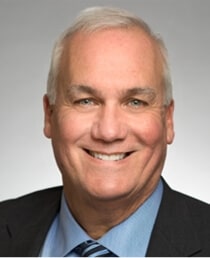
David W. Craig is board-certified by the National Board of Trial Advocacy, accredited by the American Bar Association in Truck Accident Law. He sits on the Board of Regents of the Academy of Truck Accident Attorneys (which requires the board certification in truck accident law). He is the managing partner and one of the founding partners of Craig, Kelley & Faultless LLC. He is recognized as a Top 10 Trucking Trial Lawyer and Top 100 Trial Lawyer in Indiana by the National Trial Lawyers, as well as a Top 50 Indiana lawyer by Super Lawyers. David is the author of Semitruck Wreck, A Guide for Victims and Their Families and It’s Never Been Easier to Hire the Wrong Attorney, both written to help people navigate what comes next after a tragic wreck. He also hosts the podcast After the Crash, where you can gain valuable information about the dangers involving semis and large trucks that do not follow safety protocol regarding speed, weather conditions, maintenance upkeep, etc.
 Email
Email Facebook
 Twitter
 Linkedin
 Instagram